
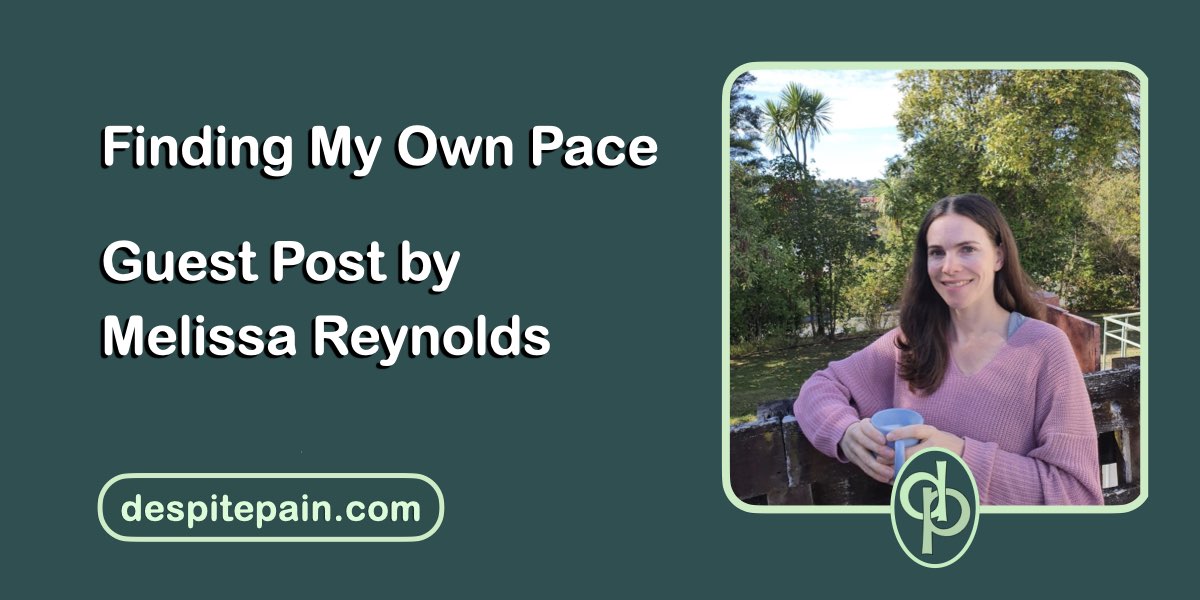
“Finding My Own Pace” is a book written by my blogging friend, Melissa Reynolds about her experience of living with chronic illness and pain. You might remember Melissa from her previous guest post about Yoga Nidra. Having lived with chronic pain for many years, Melissa has developed a range of coping techniques, many of which she shares in her new book Finding My Own Pace. Today, she’s kindly sharing a few of her tips here for my readers.
My Story With Pain – by Melissa Reynolds
I’ve lived with pain for a long time. I’ve been given different words for the symptoms I experience over the years. Fibromyostitis, fibromyalgia, myofascial pain syndrome, chronic fatigue syndrome, and chronic lower back pain.
It wasn’t until I was 38 years old that we figured it out. I have endometriosis, chronic fatigue syndrome, and hypermobility spectrum disorder, suspected hypermobile Ehlers-Danlos syndrome.
Throughout this time, I have shared my journey, first on my blog and now on my YouTube channel. I have made it my mission to share anything I learn that might help others on their journey. Because that gap between all those initial diagnoses and the complete answers? That was my entire twenties and most of my thirties. The time when I should have been having fun, traveling the world, setting up a career, and ticking items off the bucket list.
I don’t want that for anyone else.

My Whole Journey Is in “Finding My Own Pace”
I share my whole journey in my book Finding My Own Pace – it’s part memoir, part guidebook of what I’ve done to improve from moderate pain and fatigue to mild pain and fatigue in the past decade.
But here’s the summary for you.
Perpetuating Factors
We must manage perpetuating factors for chronic pain and fatigue to have any chance to improve – this means ensuring we are diagnosed correctly and treating other conditions. Dealing with the endometriosis after all those years made a massive difference for me. It also means finding and correcting any nutritional deficiencies, stopping any lifestyle habits that make things worse, and sleeping.
Sleep
Oh sleep. I hate putting this on the list because I know how hard it can be. I experienced 20 years of chronic insomnia. Not just struggling to fall asleep and stay asleep, but also poor quality sleep. I rarely had deep or REM sleep. These stages of sleep are vital for health and well-being. It still slows my mind that so many of us are left without this crucial treatment.
Yes, sleep hygiene is excellent. I have rigorous sleep hygiene. But it also wasn’t until I started a low dose of quetiapine (a couple of years ago) that it really changed the game. I tend to get around eight hours of sleep with normal amounts of deep and REM sleep. It hasn’t cured me, but it is the key to all of my improvement.

Strategic Management of Pain and Other Symptoms
It wasn’t until I stopped buying into the “you just need to push through” or “there’s nothing wrong” narratives and fought to treat the symptoms adequately that things began to change. A systematic approach to pain and other symptoms is always going to trump a haphazard approach, hoping it will get better.
Making my If This Then That pain management plan was as much about the mindset as it was about the actual plan. It was my line in the sand that I needed to treat the pain. If my pain is 4/10 when I do my symptom check-in, then I take paracetamol. If my pain is 5/10, then I take ibuprofen. If my pain is 6/10, it’s time to take a muscle relaxant and get into bed with my heating pad and do a Yoga Nidra guided meditation.
This is heavily tailored to me and my types of pain. It also doesn’t include the 101 natural pain relief mechanisms I employ. But you get the picture.
For too long, I let the pain escalate, and I’d lose days or weeks to high levels of pain, when I can most often cut it off at the start with appropriate treatment.
Pacing, or Using What I Have Well
All of us have a finite amount of energy. Some have a whole bucket and others have a teacup each day. But we must use what we have well. Learning to pace and reevaluating what pacing looks like for me as things change has been crucial.
Earlier on, I was very restricted on what I could do. I was only able to reduce my work hours from 100% to 75% – but it helped. When my babies were small and I had no choice but to continue, no matter my state, I could include decent rest in the form of Yoga Nidra guided meditation. I could talk for days about this. I am passionate about finding ways to make our lives easier. So I’ll stop at saying, be creative. Add, subtract, delegate – use what you have well.
Efficient Rest
An honourable mention that fits into nearly every category is Yoga Nidra guided meditation—or efficient rest. When I first tried Yoga Nidra, I was an exhausterwhelmed (exhausted and overwhelmed!) mama of a young baby who didn’t sleep well, suffering from chronic insomnia, moderate levels of pain and fatigue, with no help from my doctor. It becomes an efficient rest when napping is either impossible or inefficient. It soothes the nervous system and shows the body how to get into the rest and digest mode. You can do it at bedtime when you’re struggling to fall asleep. You can do it when you’re stuck awake in the middle of the night (painsomnia). I’ve done it while nursing a baby. It’s part of my flare and pain management plans. I am obsessed with it and do it every day. Yoga Nidra may not be your cup of tea but there are many types of guided meditations, so see what might resonate.
You can get a free one here if you want to try it. https://payhip.com/b/bhzOq
There are tons of free ones on YouTube, and an app called Insight Timer which is free.
Where to Find My Book “Finding My Own Pace”
So here we are, after around thirty years or so of living with pain, these are my best tips for you. Clearly, I have a lot more to say – if you’re curious, you can check out my brand new book Finding My Own Pace. It’s available in ebook, paperback, and hardcover in many different stores. You can find the universal link here.
I hope this helps. I hope you know that you aren’t alone, and I hope you get some rest today.
More about Melissa
Melissa Reynolds is a mama of four, a chronic illness advocate, and an author. She has written five non-fiction books about chronic pain and fatigue; four books explaining chronic conditions to children; and two fiction books featuring chronically ill characters. She has shared her journey online for more than a decade. You can find her on YouTube or join her newsletter list where she shares updates, resources and more.

🌸 🌸 🌸
A Note From Me…
I’m so grateful to Melissa for sharing her post with us today. Living with chronic pain can feel incredibly isolating, but voices like hers remind us that we’re not alone and that there are ways to find balance.
Thank you so much for reading.
If this post resonated with you, I’d love to hear your thoughts in the comments.
And feel free to share it with your friends or support groups.
Take care,
Liz.
Subscribe to my blog and follow me on my social media accounts to keep up to date with new posts:
Finding your own pace in life is so important