
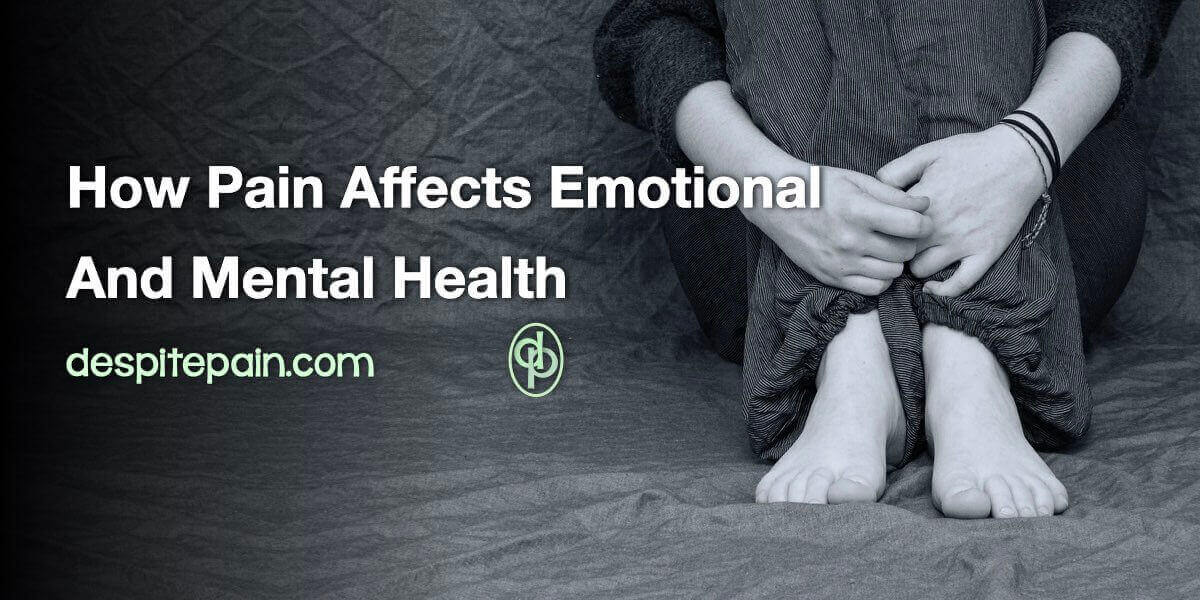
Chronic pain doesn’t just have a physical impact on people’s lives – it can also have a huge impact on mental and emotional health and it is important that we talk about it.
People often try to hide how they’re feeling. They sometimes can hide it so well that, on the exterior, they appear to be coping well. But in reality, they are struggling and need support and help.
Many people think there is a stigma about mental health problems which puts them off being open about it. But the only way to overturn that stigma is by talking about it.
Chronic Pain Can Be Life-Changing
Chronic pain can be extremely debilitating and life-changing, therefore it’s probably no real surprise that people can suffer from emotional or mental health problems due to it. People tend to look at the physical impact of pain but ignore or brush off the other issues that the pain brings.

Emotional and Mental Health Problems Affected by Pain
Here are a few ways that chronic pain can affect emotional and mental health.
Living With Chronic Pain is Stressful
We are already living in a stress-filled world, but chronic pain brings additional stress. Living with pain brings so many challenges to routine and even the most mundane tasks. Getting out of bed, showering, dressing, and getting to and from appointments can all inflict stress on people’s lives.
It’s stressful trying to hold down a job while living with chronic pain. And it’s just as stressful trying to figure out finances to make ends meet if you are unable to hold down that job. If you claim disability benefits, you’ll probably find that to be an extremely stressful process. You are questioned, made to feel that you don’t deserve financial help and often made to feel as though you are claiming fraudulently.
Pain can get in the way of relationships too which also brings added stress. It can be difficult trying to make a relationship work while dealing with pain all the time. Running a home can be extremely stressful, especially if you are a parent. Trying, but often not managing, to keep on top of household chores is also stressful.
Dealing With Stress and Chronic Pain
Guilt
Many people who live with chronic pain also live with an overwhelming amount of guilt. When they can’t do the things they feel they need to do, they blame themselves. If they believe that they can’t take care of their homes or families well enough, they pile guilt onto themselves. If they can’t cope with relationships, they feel guilty. Or if they have to give up work due to their pain, they often feel incredibly guilty because they are unable to earn. They often believe they are a burden to their families and friends.
Dealing With Guilt When You Live With Chronic Pain
Fear and Anxiety
People can drown in fear and anxiety due to their pain. They might feel unable to cope with everyday situations. Fear and anxiety often stop them from finding enjoyment in life. They worry about the future – especially about how they’ll cope if their condition worsens.
The anxiety they feel might stop them from leaving their homes or interacting with other people.
Fear and anxiety also creep in when patients worry that their doctors won’t believe them or refuse to prescribe their usual pain medications. Sadly, this happens too often and, if you read my post about the NICE guidelines, you will see why.
(There is a petition about those guidelines – please sign it)
Self-Esteem
Chronic pain slowly chips away self-esteem. They lose their self-confidence and knock themselves down at every opportunity. People start to believe they’re not good enough and that they’re not worthy.
Moodiness and Anger
It’s difficult to smile (and mean it) all the time when you’re living with pain. People might wake up in a grumpy mood or get angry at things that don’t normally bother them.
Grief
There is often a huge sense of loss when someone lives with any chronic illness. That could be the loss of a career, loss of friends or loss of social life. But the biggest loss is often who they once were. Many people no longer feel that they are the same person. They grieve for that person.
Hopelessness
When people have pain all the time, they can feel hopeless and can forget what it’s like to be free of pain. They forget what it’s like to enjoy life because pain gets in the way of everything. They lose hope that it will ever change. Hopelessness changes their outlook on life. The ‘glass half-full’ person you once knew, might become the opposite. It can be hard to find positives in a world of pain. Those feelings of hopelessness can turn to despair.
Ways to Find Positivity When You’re Living With Pain
Depression
Even people who normally appear to be happy and find the positives in life can suffer from low moods when they’re dealing with chronic pain. It’s hard to remain upbeat all the time. People might have days when they simply can’t smile or laugh. They might find no enjoyment in life. If that low mood doesn’t lift, it can turn into depression.
When depressed, people might feel sad and low and might lose interest in life. They might feel empty and lost, be tearful or have angry outbursts. They might change and can become a shadow of their former self. But, they might also hide it well from other people.
Depression can affect people’s sleep – they might not be able to sleep or they might want to sleep all the time. It can also affect eating habits. They might not feel like eating at all, eat too much or they might binge on junk food.
Sometimes people can feel so hopeless that their depression becomes extremely serious and they might develop suicidal thoughts or want to hurt themselves.
Depression is a worrying mental health problem that many people with chronic pain experience. It isn’t something that people can just snap out of. Depression is often described as a dark cloud which is hanging over you. It can be difficult to shift that cloud when you know that the pain will never stop.
If you are struggling to cope, please seek help from your doctor or counsellor.
Medication and Mental Health
There can also be mental health issues related to medication. Some medications can cause depression, mood swings and other mental health problems as a side effect. Those are serious side effects and people shouldn’t put up with them.
If Pain Has Affected Your Mental Health, Please Ask for Help
Chronic pain or living with any chronic illness can really have a huge impact on people’s lives. And, unfortunately, all of those emotional or mental health issues then have an impact on pain. It becomes a vicious circle. Pain causes stress; stress worsens pain. If pain causes depression, it is more difficult to cope with pain. This is why it’s so important to find ways of coping with those problems and get medical help if necessary.
There is no shame in asking for help. It’s doing what’s right for you. It’s always okay to admit that you’re not okay.
Such important points to raise, Liz. I’m really glad you put guilt on here because I’ve found that to be a big one.
I think the problem of dealing with the mental health side of things is further compounded by the how we can ‘feel’ we should be coping ‘better’, whatever that really means. We feel bad that we’re struggling, that we feel angry/anxious/guilty/resentful/irritable etc. The thing is, so many people with a chronic condition and living with pain feel similar. It’s important to know that.
The impact on mental health cannot be overestimated. xx
Thank you, Caz.
I think guilt is one of the biggest issues that people deal with when they live with a chronic condition.
You’re right, we often feel annoyed or angry with ourselves if we’re struggling to cope. All we’re doing is adding more pressure which makes things worse.
Thanks for your comment, Caz.
This is a great post raising awareness about a really important topic Liz. There’s so much information out there about how to deal with physical symptoms but the thing I was completely unprepared for and still struggle with is the mental aspect. The judgement and insensitive comments and the fear and anxiety about my health and future never gets any easier I feel. Physical and mental health issue closely linked. When my physical health progresses well my mental health improves and when I’m feeling down and struggling mentally my physical health declines too. Thank you for showing me and others we’re not alone in our mental struggles.
Thanks for commenting, Lucy. It’s a subject that really needs to get talked about more, isn’t it?